Adox FX-39 II Review
A Classic Black and White Developer with Character
Adox FX-39 II occupies a special place in the world of black and white film development. It is not a modern “do everything” developer, nor is it a niche curiosity. Instead, it is a refined continuation of a classic formula with a strong personality, offering photographers a balance of sharpness, tonal depth, and compensating behavior that rewards careful use.
Originally derived from Willi Beutler’s Neofin Red and later refined by Geoffrey Crawley, FX-39 has a long pedigree. Adox’s FX-39 II preserves that heritage while adapting the formula for modern films and current darkroom practices.
This review looks at how FX-39 II performs in real use, its strengths and weaknesses, and how different dilution ratios affect results.
General Characteristics
FX-39 II is a liquid concentrate black and white film developer intended for one-shot use. It is mixed fresh for each development session and discarded afterward. The developer is known for producing sharp negatives with strong midtone separation and a mild compensating effect that helps control highlights.
It is most often recommended for low to medium speed films but can also be used with faster emulsions with some care and experimentation.
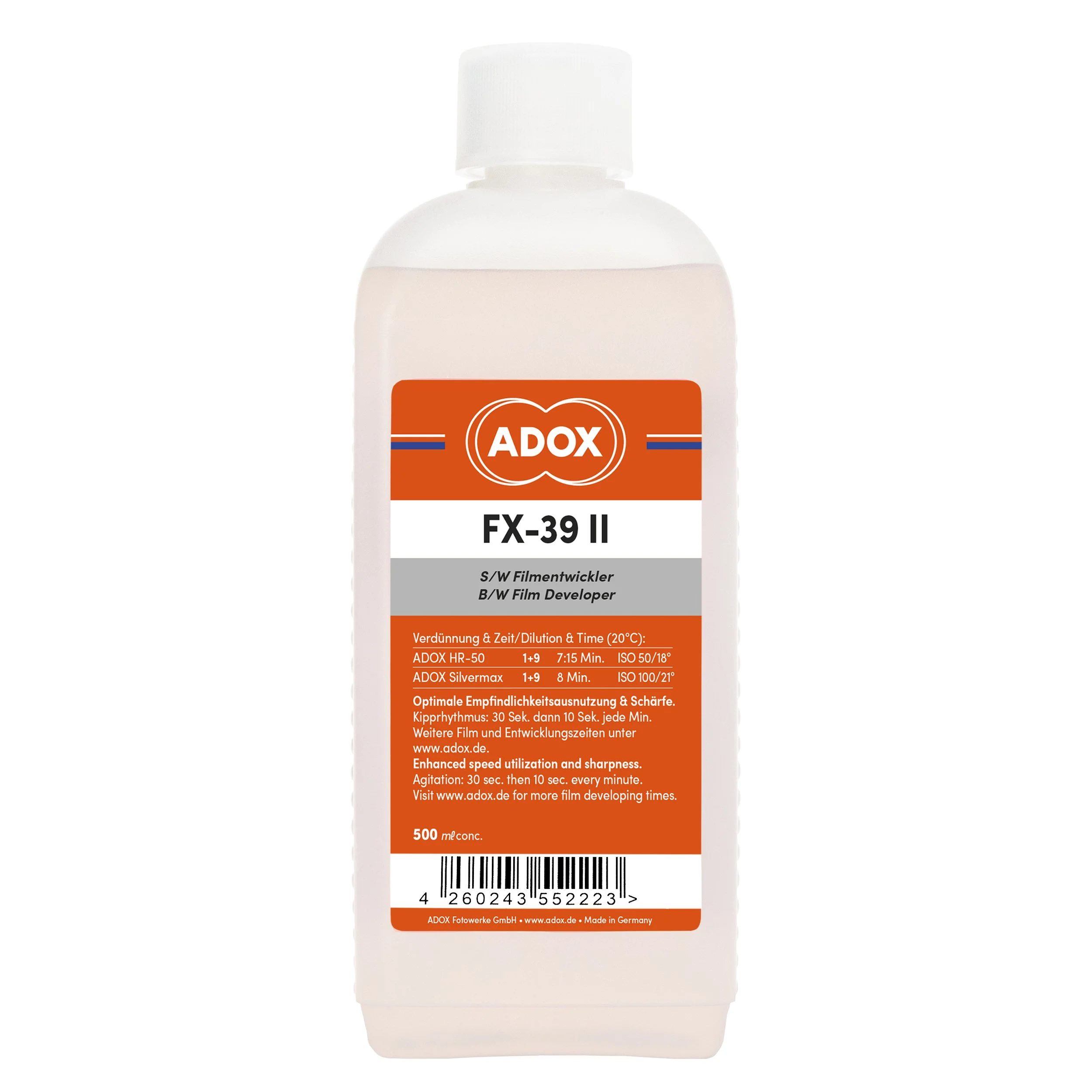
Image sourced from Adox.de
Image Quality and Look
One of the main reasons photographers choose FX-39 II is its distinctive rendering.
Negatives developed in FX-39 II tend to show excellent tonal separation, especially in the midtones. Shadow detail is well preserved, and highlights are less prone to blocking up compared to more aggressive developers. The overall look is often described as classic rather than clinical.
Sharpness is a strong point. FX-39 II produces crisp edge definition without the brittle look sometimes associated with high acutance developers. Grain is present and visible, but generally well structured and natural rather than harsh or clumpy.
When paired with slower films such as FP4, Pan F, or Delta 100, the results are particularly pleasing, with a smooth tonal scale and excellent detail.
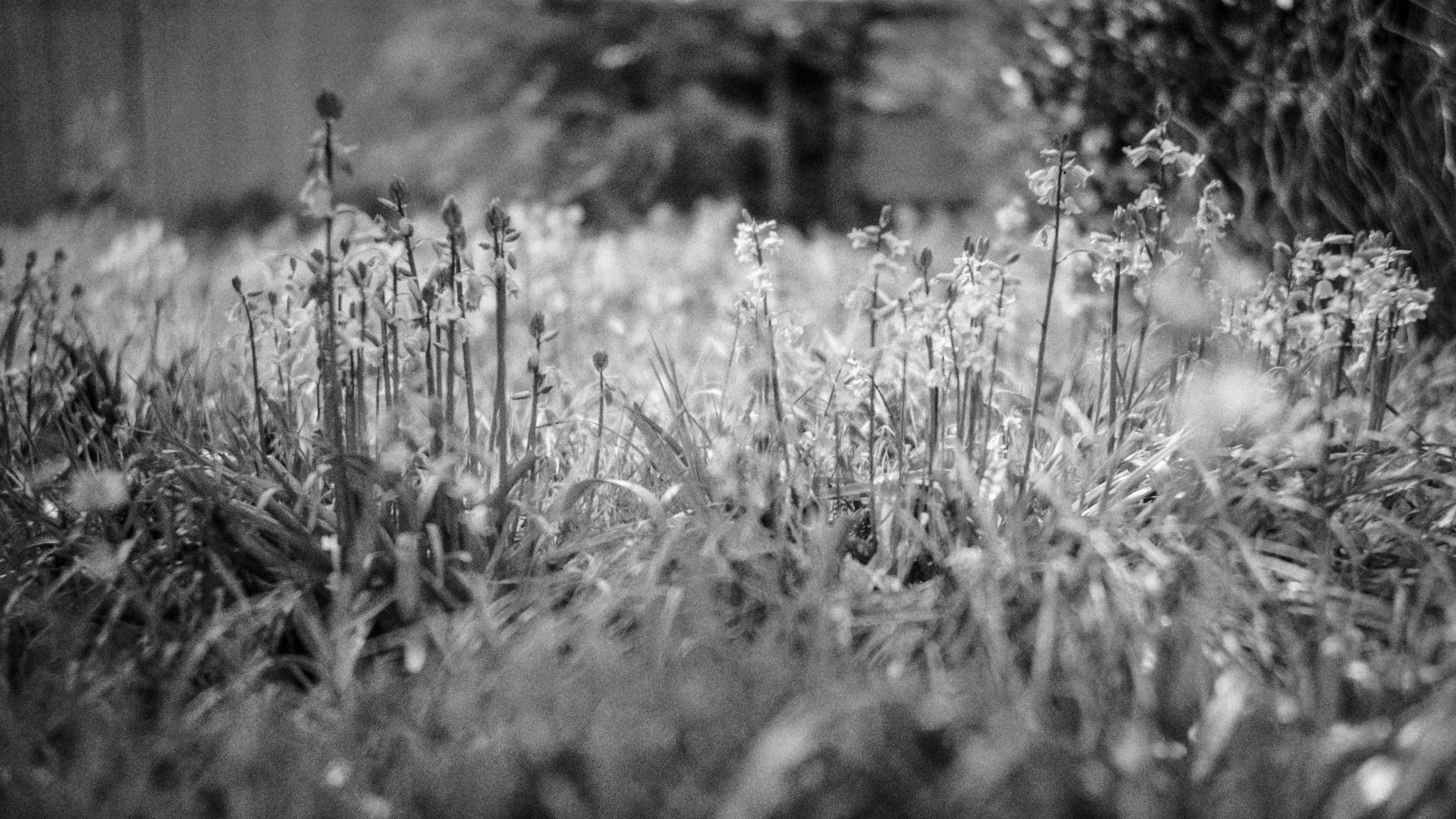
KODAK VOLLENDA 620 + ILFORD DELTA 3200 + ADOX FX-39 II ( 1:9 - 12 minutes - 20°C)
Dilution Ratios and How They Affect Results
One of FX-39 II’s strengths is flexibility. Changing the dilution has a noticeable effect on contrast, compensation, and development time.
1+9 Dilution
This is the standard and most commonly used ratio.
At 1+9, FX-39 II delivers a balanced combination of sharpness, contrast, and effective film speed. This dilution is a good starting point and works well for general photography and controlled lighting situations.
Typical development times at 20°C are often in the 9 to 12 minute range for ISO 100 to 400 films, depending on the specific emulsion and agitation method.
This dilution produces negatives that scan easily and print well with minimal adjustment.
1+14 Dilution
At 1+14, the compensating nature of FX-39 II becomes more apparent.
Contrast is slightly reduced, highlights are held back more effectively, and midtones can appear smoother. Development times increase by roughly 1.5× compared to 1+9.
This ratio works well for scenes with higher contrast or when shooting in harsh light. It is also useful if you want a slightly more relaxed tonal curve without sacrificing sharpness.
1+19 Dilution
The highest commonly used dilution is 1+19.
At this ratio, FX-39 II behaves as a clear compensating developer. Highlights develop more slowly, helping retain detail in bright areas while allowing shadows to build density over the longer development time.
Development times are typically about double those used at 1+9. This dilution is often chosen for high contrast scenes, landscapes in strong sunlight, or negatives intended for darkroom printing where highlight control is critical.
It works particularly well with slower films and careful agitation.

ICA IDEAL 225 + FOMAPAN 100 + ADOX FX-39 II ( 1:9 - 7 minutes - 20°C)

PENTAX SPOTMATIC SPII + SUPER-MACRO-TAKUMAR 50/4 + ILFORD ORTHO PLUS 80 + ADOX FX-39 II ( 1:19 - 22 minutes - 20°C)
Positives of Adox FX-39 II
FX-39 II has earned a loyal following, and for good reason.
One of its biggest strengths is tonal control. The developer handles highlights gracefully while maintaining strong shadow detail, especially at higher dilutions.
Sharpness and detail reproduction are excellent without being overly harsh. The grain structure is natural and pleasing, making it well suited to photographers who appreciate a traditional black and white look.
The liquid concentrate format makes it easy to mix and use, with no powders or complicated stock solutions. Toxicity is relatively low compared to many older formulas, making it approachable for home darkrooms.
FX-39 II also responds well to experimentation. Adjusting dilution, agitation, or development time produces predictable and meaningful changes in the final negative.

ROLLEIFLEX K4A + KODAK T-MAX 100 + ADOX FX-39 II ( 1:9 - 12 minutes - 20°C)

ROLLEIFLEX K4A + KODAK T-MAX 100 + ADOX FX-39 II ( 1:9 - 12 minutes - 20°C)
Negatives and Limitations
Despite its strengths, FX-39 II is not a perfect or universal developer.
Because it is designed for one-shot use, it can feel wasteful compared to developers that allow reuse. Photographers who process a lot of film may find it less economical.
Grain, while attractive, is more visible than with ultra fine grain developers. If maximum smoothness is your primary goal, FX-39 II may not be the best choice however, it does pair nicely with T-Grain film stocks.
High speed films and heavy push processing are not its strong points. While it can handle moderate pushing with careful adjustment, results can become grainy and dense more quickly than with developers designed specifically for pushing.
Another common complaint is the lack of comprehensive official development time charts. Many users rely on community data or personal testing, which may be intimidating for beginners.
Who FX-39 II Is For
FX-39 II is best suited to photographers who enjoy being involved in the development process and who value tonal nuance over technical perfection.
It excels with slow and medium speed films, natural light photography, landscapes, architecture, and scenes with challenging contrast. It is especially appealing to photographers who print in the darkroom and want negatives with flexible highlights.
Those looking for a simple, forgiving, all purpose developer with minimal testing may prefer something more standardized. FX-39 II rewards attention and experimentation rather than automation.
Final Thoughts
Adox FX-39 II is a developer with history, personality, and depth. It delivers sharp, tonally rich negatives with a classic feel that stands apart from more modern formulations. Its compensating behavior and dilution flexibility make it a powerful tool for photographers who want control over contrast and highlight detail.
It is not the fastest, smoothest, or most economical developer on the market, but it is one of the more expressive and rewarding ones. For photographers who see film development as part of the creative process rather than just a technical step, FX-39 II remains an excellent and enduring choice.